
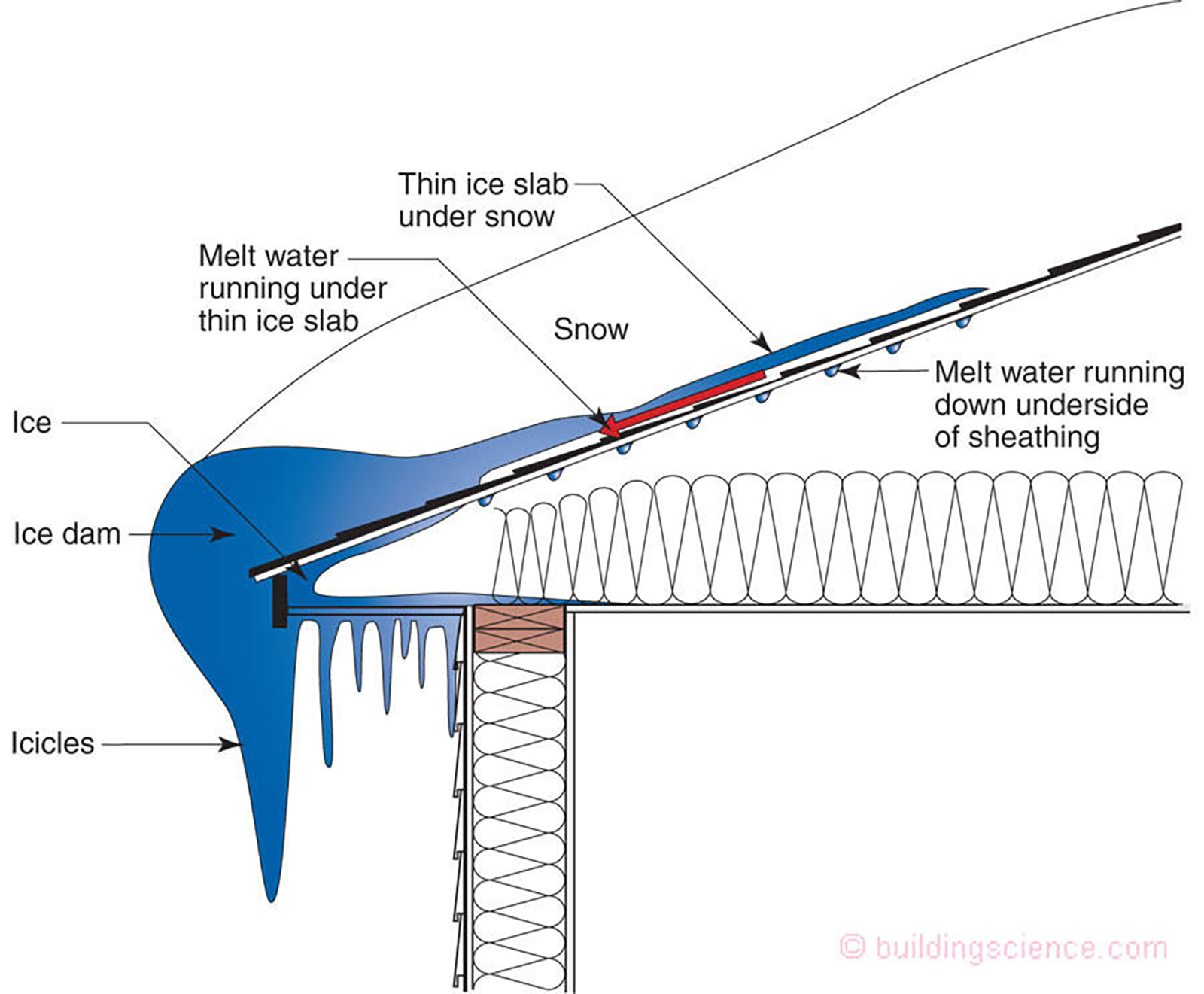
In Massachusetts and across New England, heavy snow and cold winter temperatures make ice dams one of the most common—and costly—winter roofing problems homeowners face. These hazardous ridges of ice form along the eaves (lower, horizontal edges) of roofs and can lead to leaks, damaged ceilings and walls, rot, mold, and costly repairs if not properly addressed. Understanding why ice dams form and what works to prevent and repair them is critical for every homeowner in our region.
What Is an Ice Dam and Why Should You Care?
An ice dam occurs when snow on a roof melts and then refreezes at the colder eaves, creating a ridge of ice that traps melting water behind it. The trapped water can then back up under shingles and leak into the home. This cycle can lead to interior water damage, ruined insulation, and structural rot—not to mention dangerous falling ice and damage to gutters and siding.
The underlying physics are straightforward: if the roof deck is warm enough to melt snow while the eaves remain below freezing, meltwater runs down the roof and refreezes at the colder edge, building a dam.
The Root Cause: Heat Loss Through the Roof
Ice dams result from heat escaping from the living space into attic or roof cavities, warming the roof deck enough for the snow on it to turn to water. Key contributors include:
- Air leaks from the conditioned space into the attic. These can be around light fixtures, bathroom and kitchen vents, chimneys, and recessed cans. Warm air escaping through these leaks heats the roof sheathing and melts snow above.
- Inadequate insulation, especially over exterior walls, cathedral ceilings, or low-slope roof sections. Even if insulation is present, if it’s compressed or incomplete, heat will transfer through to the roof.
- Insufficient ventilation, which prevents cold outdoor air from cooling the underside of the roof deck. Vented attic spaces help create a “cold roof” that keeps snow from melting unevenly.
Short-Term Prevention: Roof Raking and Cables
- Raking
Homeowners often resort to clearing the snow from their roofs when it accumulates to more than 5” or so. This is a great way to prevent dams from building, but be careful! You can do far more harm than good if it is done incorrectly!
It is important to avoid the urge to reach as far as you can with a snow rake as you may cause a new ice dam to form where you no longer have the protection of an ice and water member as the lower edges of a roof must have by law. Melting water will run down the roof and get to the edge of the snow and collect in it like a sponge. This may re-freeze and create a new curb of ice on the roof. As more snow melts and gets trapped behind this new ice dam it can back-up under the shingles in areas where the sticky, rubbery ice and water barrier membrane is not present and will easily soak through.
The best way to rake a roof is to either remove all the snow or to “nibble” at the edge and only remove up to the first foot or so of snow at the eave. It is important to do this BEFORE ice begins to fill the gutters.
- Cables
Another way to stop ice dams is to install special cables on the lower edge of the roof and in problematic valleys. The cables can be electrified to generate enough heat to melt any ice that forms and keep meltwater from above draining freely.
Long-Term Prevention: Stop the Heat Before It Reaches the Roof
Real, lasting prevention targets the heat transfer path from inside the house to the roof.
So what can be done?
- Air Sealing & Insulation
Air sealing the barrier between your heated space and attic is the first priority. This means methodically sealing all penetrations through the ceiling using spray foam, caulk, and insulation, followed by ensuring the attic floor or cathedral ceiling has sufficient R-value insulation.
Common trouble spots include:
- Top plates and dropped ceilings
- Ductwork and chimneys
- Unsealed recessed lighting
- HVAC and exhaust vents
A properly sealed attic combined with deep insulation slows or stops heat flow to the roof deck, keeping the roof closer to outside temperatures.
- Ventilation — Creating a Cold Roof
Insulation alone isn’t enough if there’s no ventilation. Venting the attic or rafter space with soffit and ridge vents (and, in colder climates, maintaining a continuous air channel under the roof deck) helps flush any heat that does reach the attic out into the open air. This strategy ensures the roof’s underside stays cold, preventing snow melt from ever starting.
Proper ventilation combined with insulation and air sealing is the industry standard for preventing ice dams and is required in vented roof assemblies by modern building codes.
Waterproofing Details: Ice Barriers and Drip Edge
Even with good air sealing and ventilation, some snow melt will occur on every roof in our climate. That’s why ice and water shield membranes and proper drip edge flashing are important details in new and replacement roofing:
- Ice-barrier (self-adhering) membrane installed along the eaves and valleys creates a waterproof layer under shingles to reduce interior leaks if water backs up.
- The interaction between the drip edge and membrane is important: manufacturers and codes differ, but combining a properly installed drip edge with membrane that seals the sheathing–fascia joint gives the best protection.
These details don’t stop ice dams from forming, but they can significantly reduce the risk of interior water damage when they do occur.
Repairing Ice Dam Damage: What to Do When Prevention Hasn’t Been Done
When an ice dam has already formed and caused water entry:
- Roof leak repair may include removing wet insulation, drying framing, repairing drywall and ceilings, and replacing damaged roofing materials.
- Ice dam removal should be done safely—professionals use low-impact methods such as heat and chemicals to avoid shingle damage. Hammers and sharp objects should NOT be used.
- Gutter and trim repairs may be required if heavy ice has bent or pulled materials loose.
Every winter, we respond to calls from homeowners with interior stains, sagging ceilings, and mold concerns. In many cases, the underlying cause is the same: heat loss and a roof surface above freezing under snow.
Why Invest in Prevention Now?
Preventing ice dams before the snow flies saves homeowners significant hassle and expense later. Most insurance claims for freeze-related water damage run into the thousands of dollars.
By investing in attic air sealing, insulation, and ventilation upgrades (alongside proper roofing details), you:
- Reduce energy bills
- Minimize ice dam formation year after year
- Protect your home’s structure and interior finishes
- Preserve roof life and avoid costly emergency repairs
If you’d like a free assessment of your home’s risk for ice dams or a quote for attic air sealing, insulation improvements, ventilation upgrades, or ice dam damage repair, call us to schedule a free consultation.